Mastering the Fundamentals: Why Addition and Subtraction Volume-379 Is Reshaping KDP Math Content
The self-publishing landscape has evolved dramatically over the past decade. What once required significant upfront investment and distribution deals is now accessible to anyone with a focused idea and a willingness to execute. Among the most consistent and profitable niches within the Kindle Direct Publishing (KDP) ecosystem is educational content—specifically, math practice workbooks. These resources serve a timeless need: helping children and adults alike build computational fluency through structured repetition. Within this space, Addition and Subtraction Volume-379 has emerged as a standout offering, not because it reinvents mathematics, but because it delivers exactly what the market demands with precision and clarity.
This article explores what Addition and Subtraction Volume-379 is, why it matters for KDP creators, and how it reflects broader shifts in educational publishing, consumer expectations, and digital content workflows. Whether you are a seasoned publisher or a freelancer exploring new product lines, understanding this resource can help you make informed decisions about your own content strategy.
What Exactly Is Addition and Subtraction Volume-379?
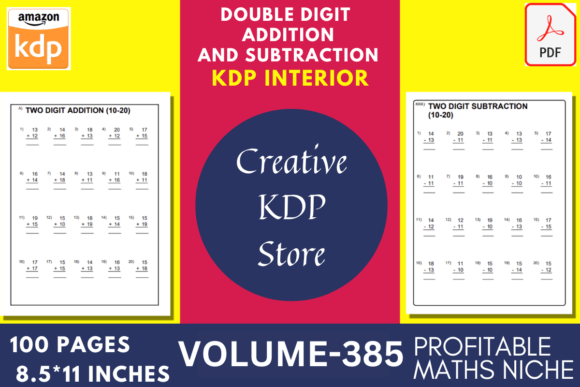
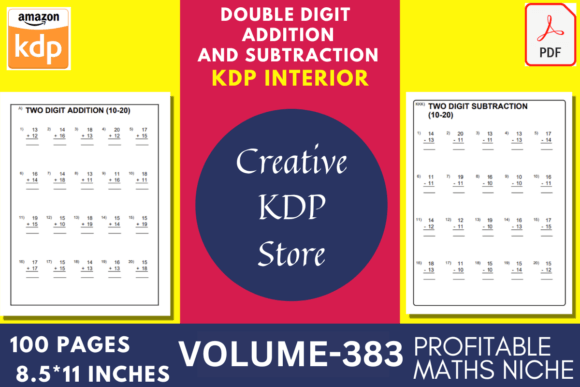
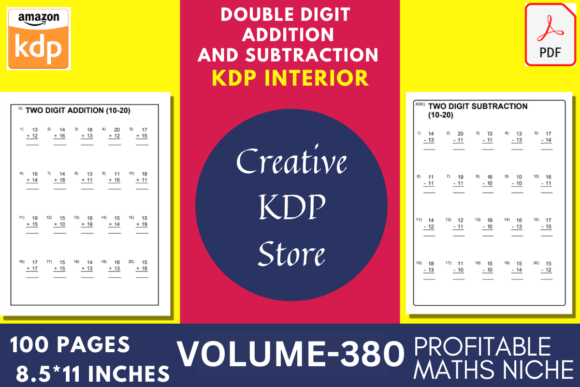
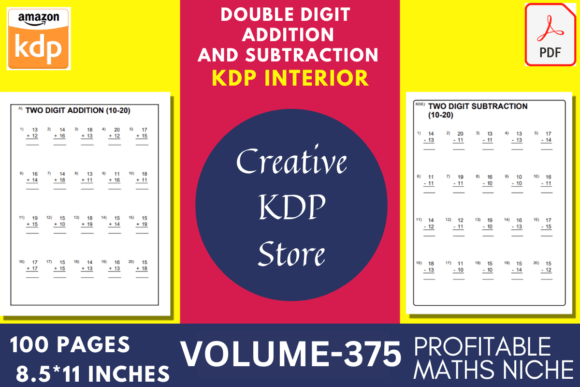
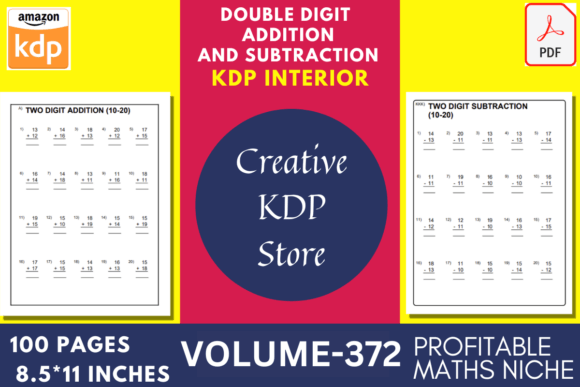
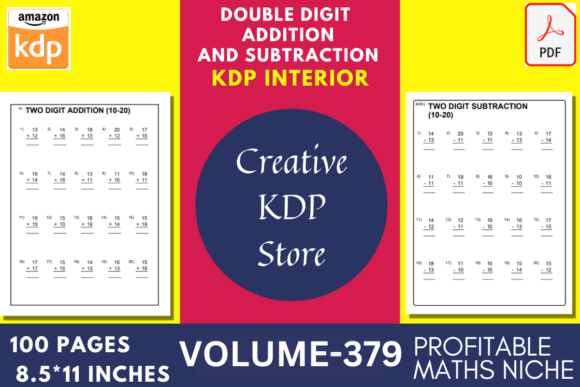
At its core, Addition and Subtraction Volume-379 is a ready-to-use KDP interior template designed for educators, parents, and self-publishers who need a high-quality, print-ready math workbook. The product includes 100 pages of math exercises on an 8.5 x 11-inch format, with 50 pages dedicated to addition problems (ranging from 10 to 99) and 50 pages dedicated to subtraction problems (also in the 10–99 range). Every problem comes with answers, making it suitable for both classroom use and at-home practice. The file is provided as a PDF with no bleed, ensuring clean printing across standard commercial and home printers alike. The interior boasts high resolution, which is critical for maintaining readability and professional appearance in print.
What distinguishes Addition and Subtraction Volume-379 from generic math worksheets is its deliberate structure. The problems are not randomly generated; they are organized to gradually build confidence and competence. The addition and subtraction sections each follow a logical progression, allowing learners to move from simpler computations to more challenging ones without feeling overwhelmed. This pedagogical consideration is exactly what buyers look for when searching for math workbooks on Amazon—they want something that feels intentional, not slapped together.
For KDP creators, the value proposition is clear: instead of spending hours designing layouts, generating problems, and formatting margins, you receive a polished, ready-to-print PDF that can be uploaded directly to KDP. This eliminates the friction of content creation and lets you focus on marketing, keyword optimization, and building a brand around educational resources.
The Broader Context: Why Math Workbooks Remain a Staple in Self-Publishing
Educational content has always been a reliable pillar of the self-publishing industry. Unlike trend-driven genres such as romance or thriller fiction, math workbooks address a persistent, non-cyclical demand. Parents and teachers consistently seek supplementary materials to reinforce classroom learning, especially in foundational arithmetic. The numbers speak for themselves: millions of searches on Amazon each month target phrases like "addition and subtraction workbook grade 2" or "math practice for kids." This search volume is not seasonal; it remains steady throughout the year, with slight upticks before the school year begins and during summer break when parents look for practice materials to prevent learning loss.
Addition and Subtraction Volume-379 fits into this market by addressing a specific sweet spot: learners who have moved beyond single-digit arithmetic but are not yet ready for multi-digit regrouping or borrowing complexities. The 10–99 range covers exactly the stage where many young students need the most repetition. This is the period when fluency in mental math begins to solidify, and having a structured, answer-included workbook can make a tangible difference in a child's confidence and speed.
Moreover, the rise of homeschooling and hybrid learning models has expanded the addressable audience. Parents who took on teaching roles during recent global disruptions have become more discerning about the materials they use. They want resources that are easy to implement, require no prep time, and deliver measurable results. Addition and Subtraction Volume-379 meets those criteria, offering a plug-and-play solution that fits seamlessly into any learning routine.
Why Creators and Entrepreneurs Are Paying Attention
For independent publishers, time is the scarcest resource. The difference between a profitable KDP business and a side project that never gains traction often comes down to how efficiently you can produce quality content. Addition and Subtraction Volume-379 appeals to creators because it removes the most time-consuming part of the workflow: interior design. Formatting a math workbook to meet KDP's print specifications requires attention to margins, trim size, bleed settings, and problem density. Get it wrong, and you risk returns, negative reviews, or outright rejection during KDP's review process.
This product solves that problem. The PDF is pre-configured to KDP's standard 8.5 x 11-inch trim size with no bleed, which means it aligns with Amazon's printing requirements without additional tweaking. The high-resolution interior ensures that numbers, symbols, and answer keys appear crisp and legible—an often-overlooked factor that directly impacts customer satisfaction. Buyers who receive a blurry or hard-to-read workbook are unlikely to leave positive reviews, and in a marketplace where reputation drives sales, this attention to detail matters.
Beyond the practical workflow benefits, Addition and Subtraction Volume-379 also enables creators to move quickly. Instead of spending weeks designing a single title, you can upload this interior, pair it with a compelling cover, and launch a listing within days. For entrepreneurs who operate multiple niches or who test different product categories, this speed is invaluable. You can validate demand, gather customer feedback, and iterate without sinking extensive time into each individual product.
Changing Needs and Expectations in Educational Content
Consumer expectations around educational materials have shifted. Parents and educators are no longer satisfied with worksheets that feel like busywork. They want content that is purposeful, aligned with learning standards, and designed to foster independence. The inclusion of answers in Addition and Subtraction Volume-379 reflects this trend. Answer keys allow learners to self-check, which promotes accountability and reduces the need for constant adult supervision. This is particularly appealing for busy parents who want their children to practice math but cannot sit beside them for every problem.
Another shift is the growing demand for print-on-demand products that feel "real." In the early days of KDP, many math workbooks looked obviously generic—thin, poorly formatted, and filled with repetitive problems that lacked any instructional logic. Today's buyers are more sophisticated. They can tell when a workbook has been hastily assembled with random number generators. Addition and Subtraction Volume-379 counters this perception by offering a clean, professional interior with consistent spacing, clear headings, and a thoughtful problem progression. These subtle design choices signal quality and care, which translates into higher conversion rates and better reviews.
The 50-page split between addition and subtraction is another deliberate design decision. Rather than mixing operations in a way that confuses learners, the book dedicates equal space to each skill, allowing focused practice. This structure aligns with how many educators approach arithmetic instruction: master addition first, then build subtraction proficiency as a complementary skill. For buyers searching for targeted practice rather than a mixed-review workbook, this clarity is a key selling point.
Practical Examples of How to Use Addition and Subtraction Volume-379
To illustrate the practical value of Addition and Subtraction Volume-379, consider a few real-world scenarios. A freelance creator who focuses on the "education and teaching" category on Amazon could purchase this interior, design a bright, engaging cover, and publish a new workbook in under a week. They might target keywords such as "addition and subtraction workbook for ages 6-8" or "math practice book grade 2." Because the interior is complete and print-ready, the only remaining tasks are cover design, keyword research, and listing optimization. For someone managing multiple titles, this efficiency compounds across product lines.
Another example: a small tutoring center could use the workbook as a supplementary resource for students who need extra practice between sessions. The answer key allows tutors to quickly check work and identify patterns of mistakes. The no-bleed format means the center can print copies in-house without worrying about edge cropping. Over time, this saves money compared to buying commercial workbooks in bulk, and the content can be reused year after year.
For parents, the value is even more direct. A parent of a second grader struggling with subtraction can purchase the workbook on Amazon, receive it in a few days, and immediately start using it. The structured progression means the child is not thrown into difficult problems without preparation. Each completed page builds momentum, and the answer key lets the parent verify progress without having to solve every problem themselves. This autonomy is a major driver of positive word-of-mouth and repeat purchases.
How Addition and Subtraction Volume-379 Connects to Larger Industry Developments
The rise of Addition and Subtraction Volume-379 is not an isolated phenomenon; it reflects several larger trends in digital content, self-publishing, and education. First, the growing sophistication of the KDP marketplace means that generic interiors no longer cut it. Buyers have more choices than ever, and they gravitate toward products that demonstrate attention to detail. High-resolution interiors, thoughtful layouts, and included answer keys are becoming baseline expectations rather than differentiators. Products that meet these standards—like this one—set the bar for what a quality workbook should look like.
Second, the move toward print-on-demand has democratized publishing but also increased competition. Success now depends less on who can produce a book and more on who can produce a good book efficiently. Creators who use ready-made interiors like Addition and Subtraction Volume-379 gain a time-to-market advantage that allows them to test more titles, gather more data, and refine their strategies faster than those who build everything from scratch. In a marketplace where trends shift and keywords evolve, this agility is a competitive edge.
Third, the educational content market is increasingly segmented. Generalized workbooks that try to cover too much ground often fail to satisfy any specific audience. Products that target a narrow skill range—like addition and subtraction within 10–99—resonate more strongly with buyers because they address a clear need. This trend toward niche specificity is visible across all categories on Amazon, from fiction to fitness. Addition and Subtraction Volume-379 exemplifies this approach by focusing squarely on a defined skill level and delivering it with precision.
Observations on Workflow and Quality
From a workflow perspective, one of the most underappreciated aspects of Addition and Subtraction Volume-379 is the no-bleed design. Bleed settings are a common source of frustration for new KDP publishers. A file that includes bleed must be formatted with extra margins, and if the interior is not set up correctly, the final printed product can have uneven edges or cut-off content. By offering a no-bleed PDF, this product eliminates that risk entirely. Creators can upload the file with confidence, knowing that every page will print exactly as intended. For someone publishing their first math workbook, this peace of mind is worth the investment alone.
The high-resolution interior is another quality marker that directly impacts customer satisfaction. In print, low-resolution graphics appear pixelated and unprofessional. Children working through math problems need clear, bold numbers that are easy to read and write next to. The resolution in Addition and Subtraction Volume-379 ensures that even when printed at full size, every digit remains sharp. This might seem like a small detail, but in a product where legibility affects usability, it is a fundamental requirement.
Finally, the inclusion of 100 pages strikes a practical balance between depth and affordability. A 50-page workbook might feel too thin to justify the purchase, while a 200-page workbook could be intimidating for young learners. One hundred pages offers enough material for sustained practice without overwhelming the user. It also fits neatly into standard binding methods, making production straightforward for both print-on-demand services and home printing.
Final Thoughts on Addition and Subtraction Volume-379
Addition and Subtraction Volume-379 is more than just a collection of math problems. It is a carefully designed tool that meets a real and ongoing need in the educational market. For KDP creators, it represents an opportunity to publish professional-quality content without investing weeks in design and formatting. For parents and educators, it provides a structured, answer-included resource that supports independent learning. And for the broader self-publishing ecosystem, it exemplifies the kind of thoughtful, niche-specific product that drives customer satisfaction and repeat sales.
As the KDP marketplace continues to mature, the gap between generic, rushed content and polished, intentional content will only widen. Products like this one demonstrate that success comes not from doing everything yourself, but from recognizing where ready-made solutions can elevate your output and free your time for higher-value activities. Whether you are launching your first math workbook or expanding an existing catalog, understanding what makes Addition and Subtraction Volume-379 effective can inform your own approach to creating content that resonates, sells, and endures.
The fundamentals of addition and subtraction never change. But the tools we use to teach them—and the strategies we use to deliver those tools—are always evolving. Embracing resources that combine pedagogical logic with publishing efficiency is not just smart; it is essential for anyone serious about building a sustainable presence in the educational content space.