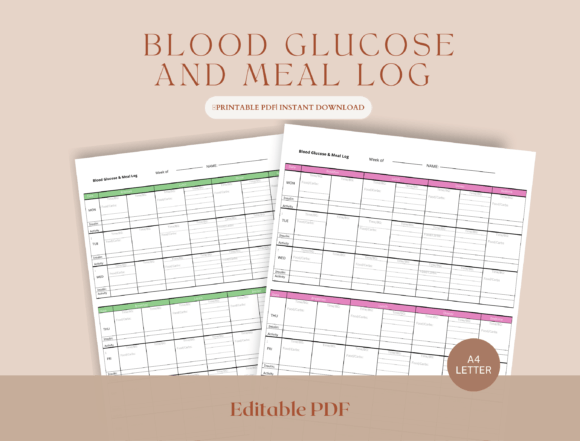
Blood Glucose and Meal Log: A Strategic Tool for Diabetes Management
Managing diabetes effectively requires more than occasional blood sugar checks and general dietary guidelines. It demands a structured approach to tracking, analyzing, and adjusting daily habits based on real data. The Blood Glucose and Meal Log is a comprehensive digital tool designed to help individuals capture their blood glucose readings alongside meal details seamlessly. This printable resource provides a clear framework for recording time-stamped glucose levels, carbohydrate intake, insulin doses, and physical activity across all meals—breakfast, lunch, and dinner. For anyone serious about understanding how food, timing, and lifestyle choices directly affect glucose control, this log transforms scattered observations into a coherent, actionable record. When used thoughtfully, it becomes a strategic asset for long-term health management rather than just another tracking sheet.
Why a Structured Log Matters for Better Glucose Control
Blood glucose management is inherently data-driven. Glucose levels fluctuate throughout the day in response to meals, exercise, stress, sleep, and medication. Without a systematic way to record and review these variables, it becomes nearly impossible to identify patterns or make informed adjustments. The Blood Glucose and Meal Log addresses this by providing dedicated sections for week, date, and each meal, alongside fields for carbs, food type, insulin dose, glucose level, and any physical activity. This structure forces consistency, which is the foundation of meaningful analysis. For professionals and entrepreneurs juggling demanding schedules, the ability to quickly see how a high-carb lunch affects afternoon glucose or how morning activity improves readings offers direct feedback for better daily decisions. Over time, this log reveals what works specifically for your body, enabling precision that generic advice cannot match.
How Thoughtful Use Supports Better Decision-Making
Tracking alone does not improve outcomes—intentional analysis does. The value of the Blood Glucose and Meal Log lies in how you use the data it collects. By consistently recording glucose readings at the same times each day and noting corresponding meals and activities, you create a dataset that highlights cause and effect. For example, if you notice that post-dinner glucose spikes occur only on days with high-carb evening meals, you can experiment with portion sizes or timing adjustments. If morning fasting levels remain elevated despite evening insulin, the log may suggest a need to review bedtime snacks or insulin dosing schedules. This kind of evidence-based decision-making is central to effective diabetes self-management. It shifts the focus from reactive responses to proactive planning, which directly supports goals like reducing HbA1c, minimizing hypoglycemic episodes, and stabilizing energy throughout the day.
Practical Applications for Everyday Use
The Blood Glucose and Meal Log is designed to fit naturally into daily routines. Its A4 size sheets and five colored templates make it easy to print and keep in a binder, on a desk, or in a kitchen drawer. The sections are intuitive: you record the week and date, then fill in details for breakfast, lunch, and dinner. For each meal, you note the specific carbs eaten, food description, insulin dose, and corresponding glucose level. There is also a dedicated space for any activity, such as walking, gym sessions, or even stress notes. This level of detail matters because glucose responses are highly individual. Two people eating the same meal may experience very different blood sugar outcomes. By capturing your personal data, you build a customized reference that informs future meal planning, insulin adjustments, and lifestyle choices. For educators, freelancers, and small business owners who often eat irregularly or under time constraints, this log helps maintain awareness even on chaotic days.
Planning with the Log: From Weekly Review to Long-Term Strategy
One of the most powerful ways to use the Blood Glucose and Meal Log is as a planning tool. At the start of each week, review the previous week’s entries to spot trends. Ask yourself: Which meals consistently led to stable glucose levels? Which patterns preceded hypoglycemic lows? Were there specific days where activity levels improved readings? Use these insights to plan the upcoming week’s meals and medication timing. For instance, if you see that a moderate-carb lunch with a 30-minute walk after yields optimal afternoon glucose, you can intentionally replicate that combination. Over months, this iterative process becomes a strategic cycle of observation, planning, execution, and review. This approach is especially relevant for entrepreneurs and decision-makers who are accustomed to using data to drive results. The same logic applies here: track, analyze, adjust, and improve. The log becomes your personal feedback loop for metabolic health.
What to Consider Before Relying on the Log
While the Blood Glucose and Meal Log is a practical resource, it is not a substitute for professional medical advice. Its primary role is to support your self-management efforts by organizing data in a way that is easy to review and share with your healthcare team. Before fully relying on it, consider the accuracy of your glucose meter, the consistency of your recording habits, and whether your entries capture enough context to be meaningful. For example, recording only glucose numbers without noting portion sizes or activity intensity reduces the log’s utility. Similarly, if you record sporadically, the data may not reveal reliable patterns. To maximize value, commit to logging at least the same times each day, ideally before and after meals, and include activity notes whenever relevant. Also be aware that glucose levels can be influenced by factors beyond food and exercise, such as illness, hormonal changes, and stress—these should be noted as well. The log is a tool for insight, not a guarantee of control, and works best when combined with regular communication with your doctor or diabetes educator.
Risks of Using the Log Without Clear Goals
Tracking without purpose can lead to data overload or, worse, misinterpretation. If you fill in the Blood Glucose and Meal Log daily but never review the entries, the effort yields little benefit. Likewise, if you treat every glucose fluctuation as a crisis without understanding normal variability, you may experience unnecessary anxiety. A common pitfall is focusing solely on numbers without considering the broader context—what was eaten, how much activity occurred, and how you felt at the time. This can lead to misguided adjustments, such as reducing insulin based on one low reading without accounting for preceding exercise. To avoid these risks, set clear intentions before starting. Decide which patterns you want to understand, what questions you want the data to answer, and how often you will review the log. For example, your goal might be to lower average post-meal spikes by 20 points over three months, using the log to test meal timing adjustments. Without such specificity, the log remains a collection of data rather than a strategic resource.
Using the Log Intentionally Rather Than Randomly
Intentional use means the Blood Glucose and Meal Log serves a defined purpose in your broader diabetes management plan. Start by identifying one or two specific areas you want to improve. Perhaps you want to understand how different breakfast options affect your mid-morning glucose, or you want to fine-tune your insulin-to-carb ratio at dinner. Use the log to focus on just those variables for a few weeks. Block out time each Sunday to review the previous week’s entries and note any emerging trends. Share relevant pages with your healthcare provider during appointments to make discussions more productive. The log is also useful for experimenting with new foods or exercise routines in a controlled way. For instance, if you introduce a new type of carbohydrate, record it along with your glucose response to see if it fits your management goals. By narrowing your focus and reviewing regularly, you transform the log from a passive record into an active management tool. This intentional approach is what separates better outcomes from mere activity.
Long-Term Value for Daily Productivity and Health
Consistent use of the Blood Glucose and Meal Log builds a personal health database that pays dividends over time. As weeks turn into months, patterns become clearer, and your ability to predict how specific meals, activities, and insulin doses will affect your glucose improves. This reduces the cognitive load of constant decision-making, freeing mental energy for work, creativity, and other priorities. For busy professionals, this efficiency is significant. Instead of guessing what to eat or how much insulin to take, you rely on documented evidence from your own life. The log also serves as a communication bridge with healthcare providers. Instead of vague recollections of how your week went, you bring concrete data that helps your doctor make more precise recommendations. In this sense, the log supports not only glucose management but also your productivity and long-term health stability. It is a small investment of time each day that compounds into greater confidence, fewer glucose-related disruptions, and a clearer understanding of what keeps your body in balance.
Practical Tips for Getting the Most Out of the Log
To make the Blood Glucose and Meal Log genuinely useful, integrate it into your existing routine without adding friction. Keep several printed copies in a location where you naturally prepare meals or check your glucose, such as the kitchen counter or home office. Use the five colored templates to differentiate weeks or meal types if that helps with visual clarity. Record entries soon after eating or checking glucose, not hours later, to improve accuracy. When noting carbs, be as specific as practical—write “quinoa, 45g cooked” instead of just “grain.” For activity entries, include type, duration, and intensity level. If you skip a day, do not stress; simply resume the next day. The goal is consistency over perfection. Over time, you will build a resource that helps you make smarter decisions with less effort. That is the real value of a well-used log.
Final Strategic Takeaway
The Blood Glucose and Meal Log is more than a printable tracking sheet. It is a framework for intentional, data-informed diabetes management. Used thoughtfully, it supports better decision-making, clearer communication with healthcare providers, and a deeper understanding of how your daily choices affect your glucose levels. It works best when paired with clear goals, regular review, and a willingness to adjust based on what the data reveals. For anyone committed to long-term health while managing the demands of a busy professional life, this log offers a simple yet powerful way to stay in control. Whether you are an entrepreneur, educator, freelancer, or busy parent, the discipline of structured tracking combined with periodic reflection leads to better outcomes over time. Start with a small, specific focus, build the habit, and let the data guide your next steps.